Compressive Strength And Young’s Modulus



General Description
The measurement of the mechanical properties of electrodes, such as the compressive strength and Young’s modulus (also called static elasticity modulus), is vital to quantify the mechanical behavior and the thermal shock resistance of the electrodes for two main reasons:
- A high Young’s modulus, typically combined with high compressive strength, is an indication of a brittle material that is very sensitive to temperature differences.
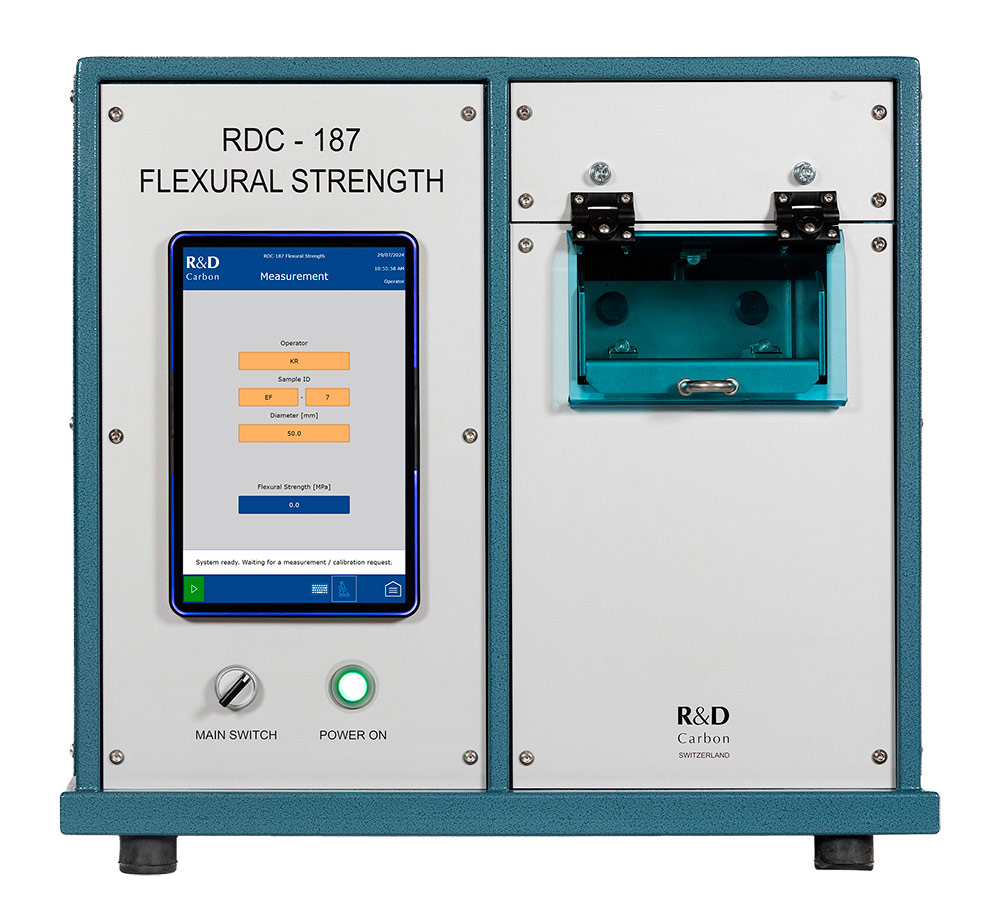
- The ratio between the compressive strength and the flexural strength (RDC-187 apparatus) gives an indication of the presence of macrocracks.
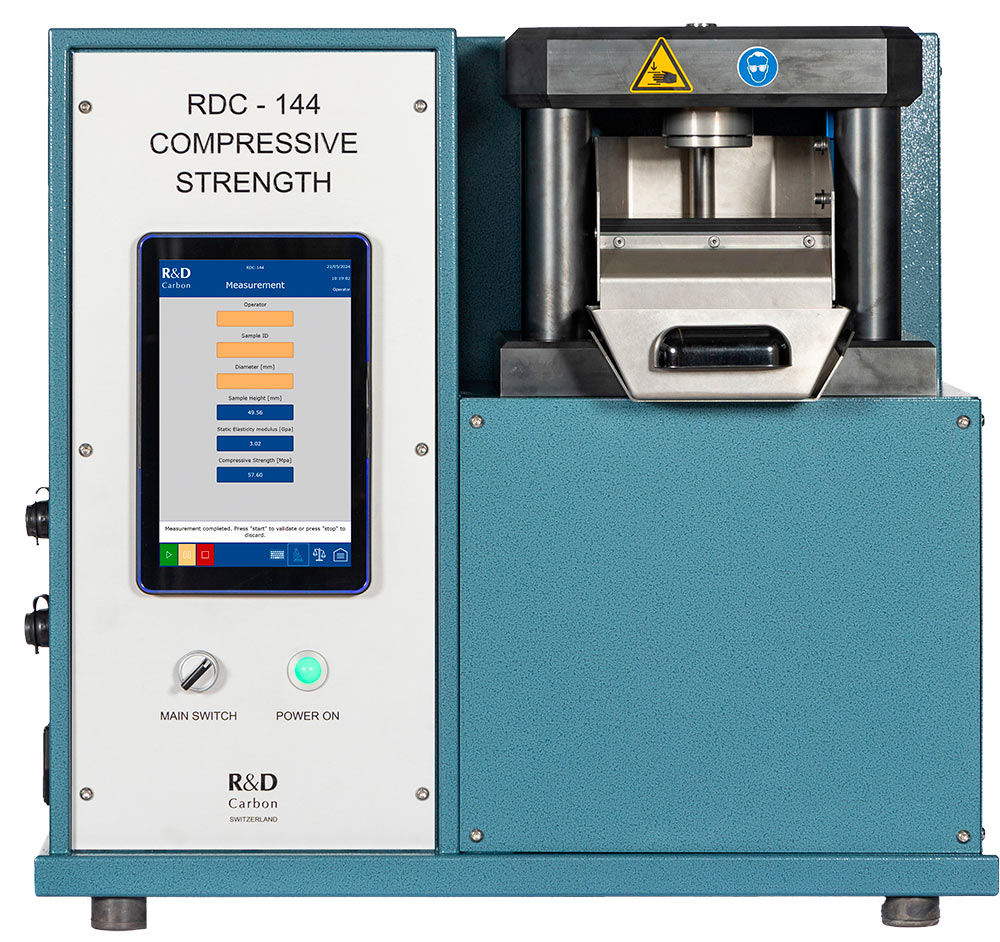
The measurement is conducted with the RDC-144 apparatus, where the uniaxial compressive load on a core sample with a diameter of 50 mm and a height of 50 mm is increased until the sample breaks. The maximal load applied onto the sample will be divided by its surface area to calculate its compressive strength in MPa.
At the same time, the change in length is recorded and the Young’s modulus, corresponding to the slope of the stress/strain graph, is calculated and expressed in GPa.
Technical Information
Other Electrodes, Lining Equipment