Apparent Density and Electrical Resistivity



General Description
The specific electrical resistance of the electrode is an important property to minimize, as it directly affects the voltage drop and, thus, the metal production cost. It not only characterizes the behavior of the electrode during its use, but it also gives interesting information about the production of the electrode, such as its structural condition due to baking or graphitization processes, as well as the raw materials and the production parameters. The potential presence of cracks can also be detected with this test.
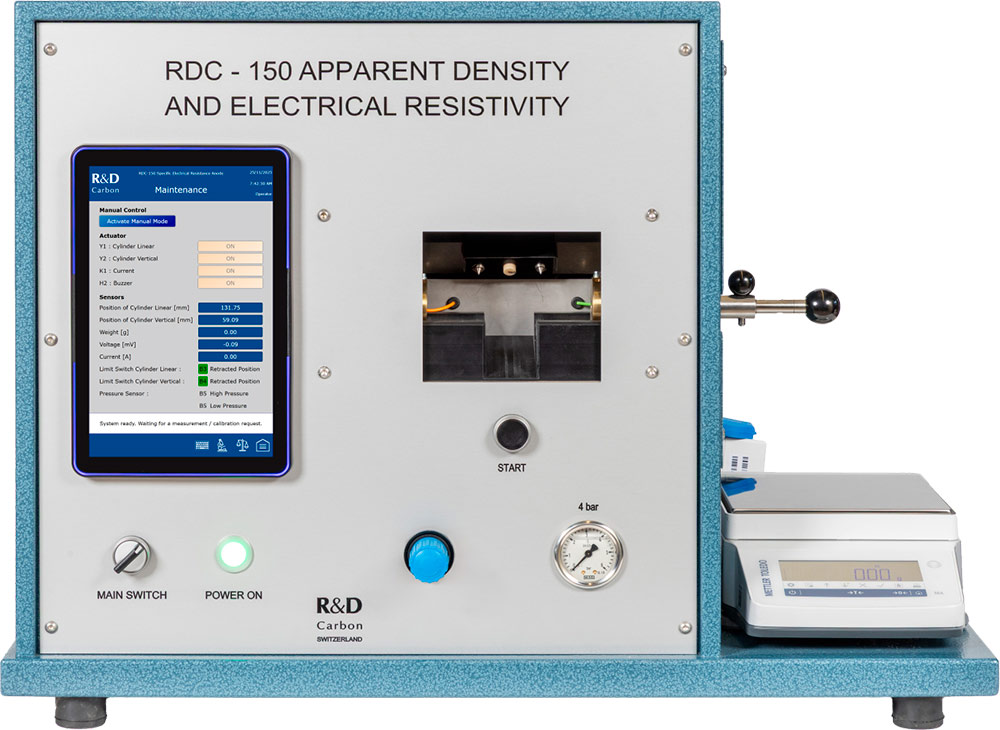
The measurement is conducted with the RDC-150 apparatus, where a core sample with a diameter of 50 mm and a length of 130 mm is clamped between surfaces with a specific load. A constant direct current is applied to the sample and the voltage drop is measured to calculate its specific electrical resistance in μΩm.
The RDC-150 apparatus also features simultaneous calculation of the apparent density by measuring automatically the length, the diameter and the weight of the sample.
Technical Information
Additional Recommended Equipment
Video
Other Electrodes, Lining Equipment